
I. Executive Summary
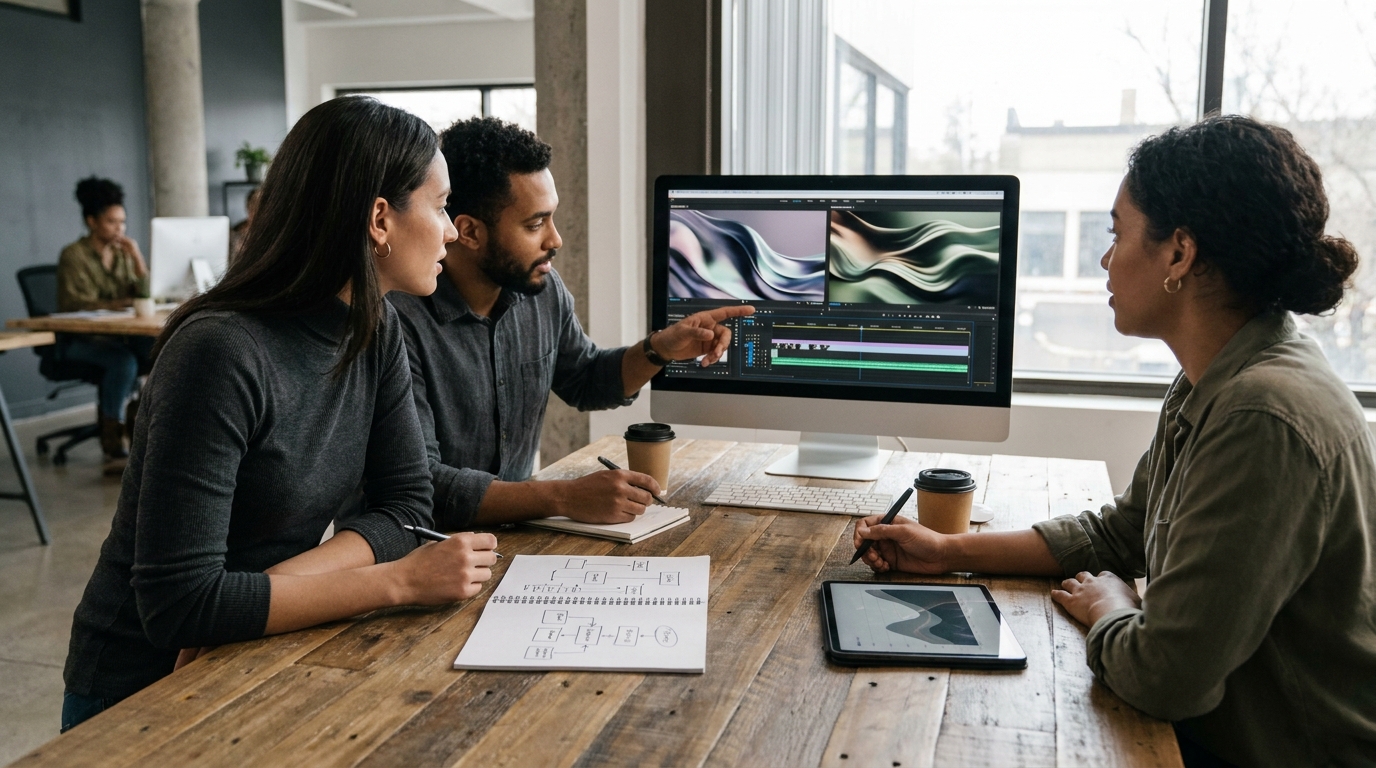
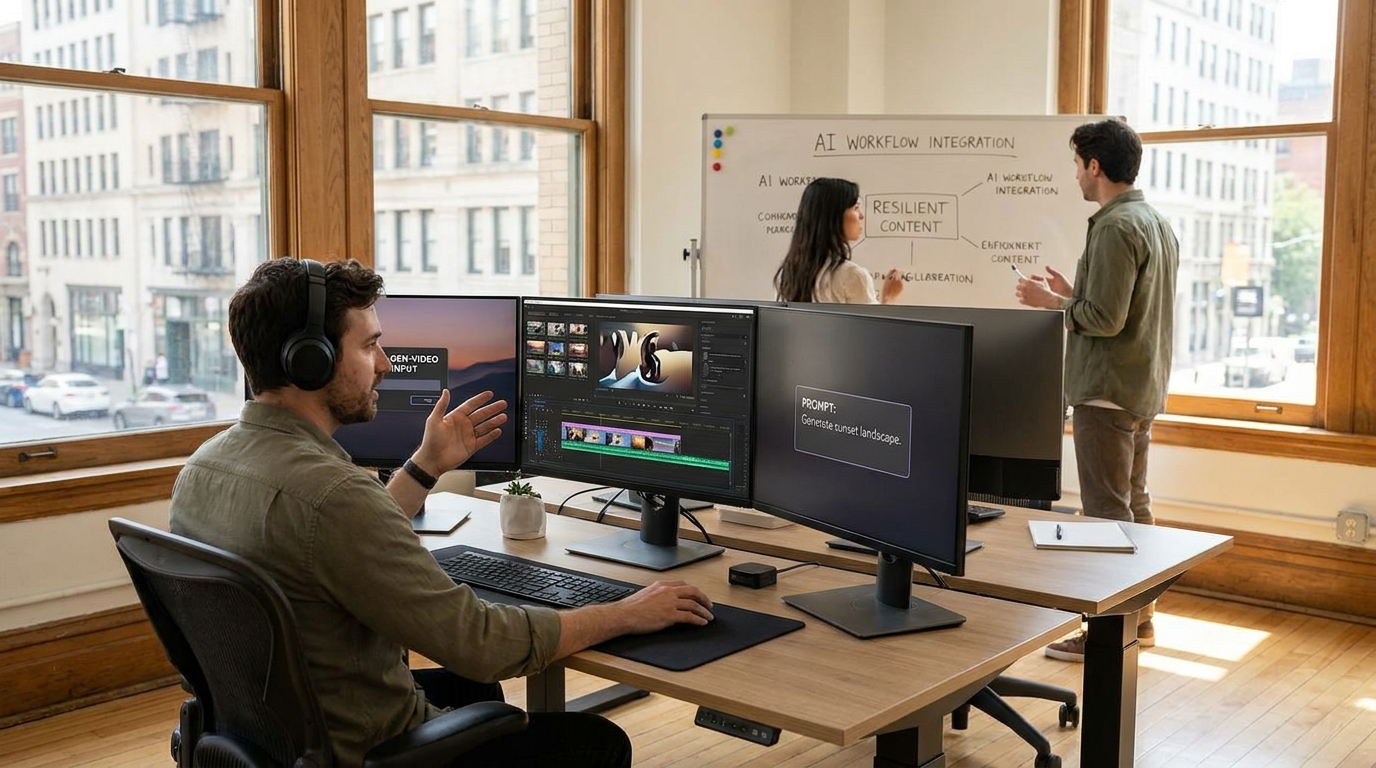
Modern creative editing workflows are undergoing a fundamental transformation as studios, marketing agencies, and small teams integrate generative video and AI into day-to-day operations. Building a resilient AI content creation workflow requires a strategic approach to content planning and content quality control, ensuring that automated efficiency does not compromise brand standards. Editorial teams and digital creators must navigate a rapidly expanding software ecosystem to determine where automated tools provide genuine leverage.
This comprehensive guide details the journey from early creative experimentation and AI model selection to practical workspace integration and enterprise production scaling. Readers will explore foundational industry developments, tool categories, team collaboration mechanics, and step-by-step frameworks designed to streamline modern video production.
II. Table of Contents
- Executive Summary
- Foundation
- Deep Dive Sections
- Understanding the Modern AI Video Ecosystem and Tool Categories
- Workflow Execution, Team Collaboration, and Automation
- Scaling Production: Enterprise Adoption, User Metrics, and Localization
- Practical Application
- Frequently Asked Questions
- Conclusion
- Sources
III. Foundation
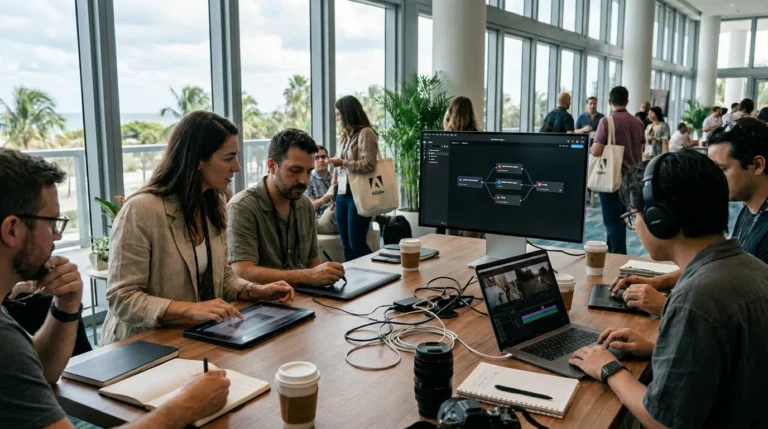
The generative AI video landscape shifted decisively from experimental sandbox environments into robust enterprise production during late 2026. A prominent marker of this evolution occurred at Advertising Week New York 2026, where Kling AI made its industry debut. The platform showcased its advanced model, Kling 4.0, to global advertising leaders while participating in main-stage discussions alongside major agency and technology partners.
Held from October 5 to 8 at The Penn District in Manhattan, Advertising Week New York brought together more than 1,300 speakers across over 500 sessions. During the featured session, titled “The New Production Engine: Powering Creativity at Scale with Kling AI,” leadership from Kling AI, WPP, and Adobe examined the collaborative future of video generation. The panel highlighted a structured value chain across the industry: foundation model developers like Kling, creative platform providers like Adobe, and global campaign execution layers like WPP.
Ecosystem integrations have quickly followed these technological milestones. Adobe has incorporated previous iterations like Kling 3.0 and 3.0 Omni into Adobe Firefly, with extended deployment plans for newer models. Simultaneously, agency networks such as WPP integrated Adobe Firefly Foundry into their proprietary WPP Open operating systems, establishing scalable pathways for enterprise deployment.
IV. Deep Dive Sections
Understanding the Modern AI Video Ecosystem and Tool Categories
Navigating the current software market requires distinguishing between specialized creative utilities. Based on hands-on workflow testing conducted in October 2026, platforms fall into distinct operational brackets. Design and general editing applications—such as Canva, Descript, CapCut, and OpusClip—focus on post-production polish, clipping, and multi-format resizing. Conversely, dedicated video generators like Creatify, Pippit, Runway, and Kling 3.0 focus on raw prompt-to-video generation.
When structuring a production pipeline, creators must weigh the tradeoffs between polished repurposing tools and raw generation engines. Teams prioritizing rapid social media clipping and multi-platform formatting often lean toward editing suites with robust collaboration layers. On the other hand, creative directors seeking original scene generation rely on foundational video models. Selecting the correct category depends entirely on whether a project requires modifying existing footage or synthesizing entirely new visual narratives from text prompts.
Workflow Execution, Team Collaboration, and Automation
Standardized workflow testing provides clear benchmarks regarding how modern AI platforms handle complex multimedia workloads. A three-person team executing a monthly benchmark of eight 60-second social videos, two 5-minute product explainers, and two language translations per explainer revealed distinct operational advantages. Workspace solutions like HeyGen managed the entire workflow within a single environment, utilizing a Video Agent for social drafts, Avatar IV for presenter-led explainers, and integrated translation modules for localized versions.
Collaboration mechanics vary significantly among competing platforms. While Canva scored higher in deep multi-user collaboration and shared brand templating during evaluation, HeyGen bridged the gap by allowing users to generate end-to-end presenters without leaving the interface. Both environments support shared templates, centralized Brand Kits, glossaries, and direct commenting on drafts, which helps maintain creative oversight across distributed teams.
Enterprise connectivity extends these efficiencies through native integrations. Business-tier plans connect directly with workflow automation tools like HubSpot, Zapier, Make, and n8n, drawing from shared credit pools. These integrations deliver measurable productivity gains; for example, organizations such as Advantive reported cutting their training content creation time in half by utilizing centralized AI video workflows.
Scaling Production: Enterprise Adoption, User Metrics, and Localization
Adoption metrics illustrate the rapid global expansion of generative video technologies. By June 2026, Kling AI scaled to serve more than 100 million users distributed across 224 regions, supporting nearly 50,000 enterprise organizations. This widespread deployment is reshaping traditional media and entertainment workflows by accelerating early-stage pre-production and ideation cycles.
Beyond raw generation, AI-assisted localization is altering media distribution strategies. Studios utilize automated translation modules to generate translated dialogue, adapt subtitles, and produce region-specific promotional variants for diverse audiences. Recent platform updates, such as HeyGen’s September 2026 release of API-driven B-roll generation with synchronized sound, further automate routine asset assembly.
Despite these advancements, operational bottlenecks persist. Teams frequently encounter challenges maintaining character consistency across extended scenes, achieving completely believable facial expressions, and enforcing strict brand compliance across automated outputs. Addressing these friction points requires rigorous quality control protocols and human-in-the-loop review stages before final asset publishing.
V. Practical Application
Adopting generative video tools successfully requires a structured, multi-step implementation framework for creative teams and small businesses.
- Establish a Centralized Toolkit and Workspace Architecture: Consolidate brand assets by uploading shared logos, color palettes, and typography into centralized Brand Kits. Maintain a standardized glossary and asset repository to ensure consistent outputs across all team members.
- Define Standard Operating Procedures for Multi-Step Workflows: Document clear operational handoffs. Move systematically from prompt engineering and automated B-roll generation to presenter scripting, avatar selection, and automated translation.
- Implement Quality Control Protocols: Establish dedicated review gates to catch inconsistencies in character rendering, audio-visual synchronization, and brand alignment prior to final publishing.
When auditing software investments, operators must evaluate subscription pricing tiers against credit consumption models, especially when integrating external automation platforms like HubSpot or Zapier. Team training timelines should factor in a two-week familiarization period for staff to master prompt structures, workspace permissions, and asset management protocols.
VI. Frequently Asked Questions
What is the difference between AI video generators and design/editing tools?
AI video generators specialize in synthesizing raw video scenes from text prompts, whereas design and editing tools focus on post-production polish, cutting, multi-format resizing, and team collaboration.
How do generative video tools affect early-stage creative workflows?
Generative video tools shorten pre-production and ideation cycles by enabling creators to rapidly turn written prompts into draft scenes, virtual characters, and visual effects.
Can small teams manage multi-language video localization using AI?
Yes, modern platforms include automated translation and lip-syncing modules that allow small teams to produce translated dialogue, adapted subtitles, and regional promotional variants efficiently.
What are the primary operational challenges when adopting enterprise AI video platforms?
Primary challenges include maintaining collaboration depth, enforcing brand templating consistency, and managing quality control around character consistency and audio-visual synchronization.
VII. Conclusion
The rapid evolution of generative video tools marks a permanent shift from experimental technology to enterprise-grade production workflows. Industry milestones, such as Kling AI’s showcase at Advertising Week New York, demonstrate that foundational models are now deeply integrated into the operational toolkits of major agencies and creative studios alike.
For creative teams and small business owners, the immediate next step involves auditing the current editing stack and running targeted pilots with integrated workspace solutions. By balancing automated efficiency with rigorous quality control, organizations can scale output while maintaining creative integrity.