
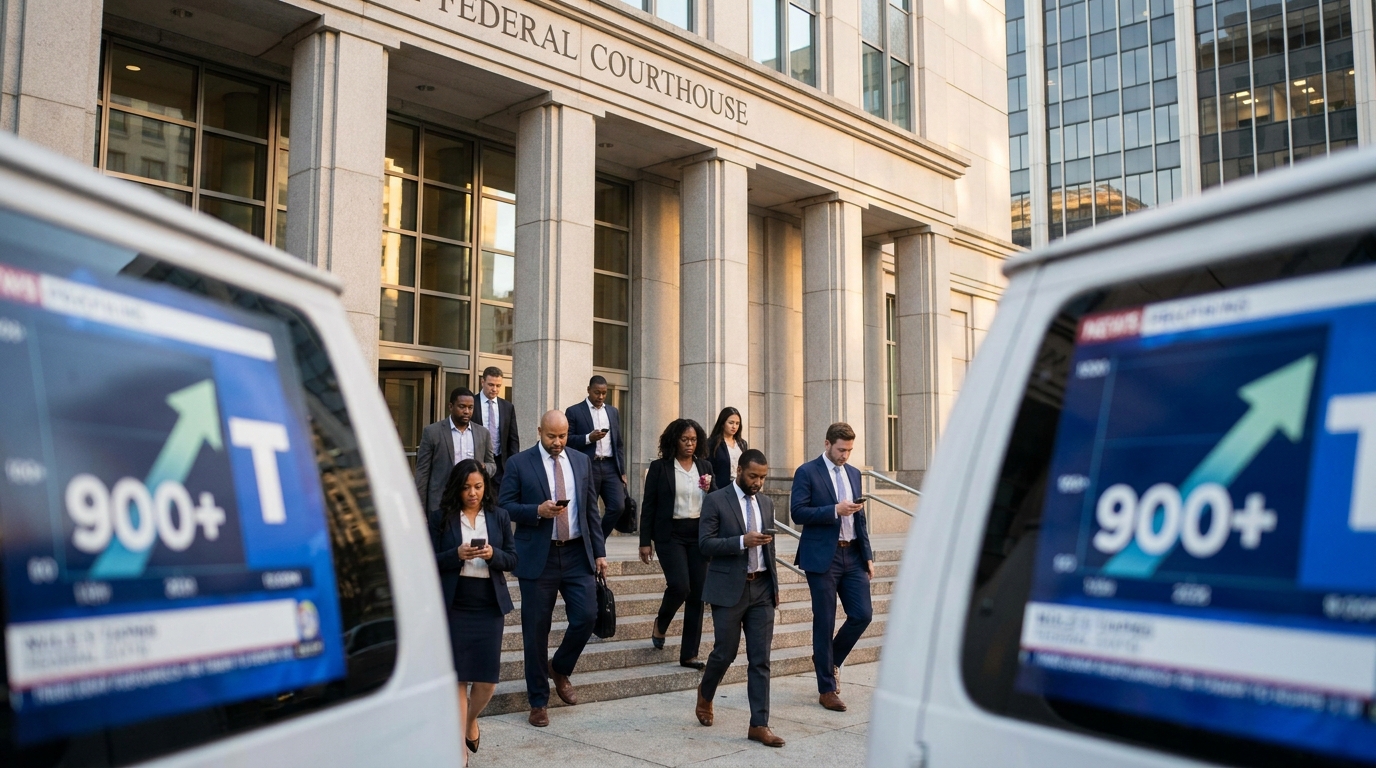

A federal jury in Oakland, California, reached a unanimous verdict on Monday clearing OpenAI of all liability in a high-profile lawsuit filed by co-founder Elon Musk. The jury determined that the artificial intelligence firm did not abandon its foundational commitment to developing technology for the benefit of humanity. This decision concludes a significant legal challenge that accused the company of prioritizing private profit over its original non-profit mission, according to BNN Bloomberg.
This legal triumph is viewed as a pivotal moment for OpenAI as it navigates the complex preparations for a historic initial public offering (IPO). By removing a major source of litigation risk, the verdict strengthens institutional investor confidence in the company’s governance and long-term strategic direction. Al Jazeera reports that OpenAI currently maintains a market valuation of approximately $852 billion, and the resolution of this case may propel that figure toward the $1 trillion milestone. For a company seeking massive capital infusions to sustain its computational needs, a clean legal record is essential for securing the high-level commitments required for a successful public debut.
Deliberation Speed and the Statute of Limitations Ruling
The speed with which the jury reached its decision underscored the challenges facing Musk’s legal arguments. After 11 days of testimony and arguments that began in late April, the panel required less than two hours of deliberation to return a unanimous verdict in favor of OpenAI. This rapid conclusion suggests that the jury found the evidence presented by OpenAI’s defense more compelling than the allegations of mission drift brought forward by the world’s richest person.
A critical component of the ruling rested on technical legal grounds regarding the timing of the lawsuit. BNN Bloomberg reported that the jury found Musk initiated his legal action after the applicable statute of limitations had already expired. This procedural finding effectively barred the claims regardless of the perceived merit of Musk’s arguments concerning the company’s shift in focus. By failing to file within the required timeframe, Musk’s pursuit of damages was legally neutralized before the deeper philosophical arguments could take root in a final judgment.
The reliance on the statute of limitations provides OpenAI with a robust shield against similar retroactive claims from early participants or donors. From a legal strategy perspective, winning on procedural grounds is often more definitive for a corporation than winning on the interpretation of a “mission statement.” A procedural victory limits the scope for future discovery and reduces the likelihood that internal communications from the founding era can be used in subsequent litigation. This outcome allows OpenAI to move forward without the threat of a prolonged re-examination of its 2015 organizational structure.
Trial Testimony and the Dispute Over Executive Candor
Throughout the trial, the character and reliability of OpenAI’s leadership served as a central point of contention. Musk’s lead attorney, Steven Molo, argued during closing statements that several witnesses had openly questioned the candor of OpenAI CEO Sam Altman. Molo reminded the jury that Musk himself, when asked if he found Altman completely trustworthy during his own testimony, did not provide an unqualified affirmative response. According to BNN Bloomberg, the defense characterized Altman as a leader who prioritized personal wealth and investor returns over the safety and altruistic goals of the organization.
The trial also revisited the dramatic events of November 2023, when the OpenAI board briefly fired Altman before reinstating him days later. Musk contended that this internal upheaval was a response to deceptive conduct that the board had identified at the time. He argued that the subsequent restructuring of the board and Altman’s return signaled a final pivot away from the company’s charitable roots. OpenAI’s President, Greg Brockman, was also named as a primary figure who viewed the enterprise as a vehicle for significant personal enrichment at the expense of the non-profit arm.
The defense countered these claims by portraying Musk’s motivations as being rooted in financial jealousy and a desire for control. OpenAI’s legal team argued that Musk “saw dollar signs” and was reacting to the company’s success after he had ceased his own financial support. This “he said, she said” dynamic forced the jury to weigh the original intent of the 2015 founding documents against the modern realities of the AI industry. Ultimately, the jury’s decision suggests that the narrative of executive deception did not meet the legal threshold required to establish liability or prove a breach of the foundational mission.
Capital Requirements and the Microsoft Partnership Scale
The financial scale of OpenAI’s operations was a recurring theme during the 11-day trial, specifically regarding its relationship with Microsoft. Testimony during the proceedings revealed that Microsoft’s investment in the AI firm has exceeded $100 billion. According to Al Jazeera, Musk contended that Microsoft was aware throughout the partnership that OpenAI had shifted its priorities from altruism to profit. He argued that the non-profit’s resources were being wrongfully used to enrich insiders and the tech giant at the expense of the original charitable mission.
The $100 billion figure highlights the extreme capital intensity required to lead the global artificial intelligence race. OpenAI’s defense suggested that such massive investments were necessary to achieve the very “benefit to humanity” that Musk claimed was being ignored. The company argued that without transitioning to a structure that could attract significant private capital, the development of advanced AI models would have been impossible. This financial reality creates a direct conflict with the early vision of a purely donor-funded research lab, which Musk helped establish with an initial $38 million investment.
Removing the legal cloud of the Musk lawsuit is a necessary operational step for OpenAI as it moves toward a $1 trillion IPO filing. Institutional investors typically require a clear path through litigation before committing to the valuations OpenAI is currently seeking. The resolution of this case clarifies the company’s right to its commercial structure and its ability to continue the Microsoft partnership without interference. This stability is vital for the company’s near-term plans to scale its infrastructure and maintain its competitive edge against rivals like Google and Meta.
Evolution from Non-Profit Roots to Commercial Dominance
The historical rift between Musk and OpenAI traces back to the company’s launch in 2015 as a non-profit research organization. Musk was a key co-founder who provided nearly $40 million in early funding to ensure that artificial intelligence remained an open-source tool for the public good. However, Al Jazeera reports that the relationship soured as the company moved toward a “capped-profit” model to attract the billions of dollars needed for compute power. Musk’s decision to stop funding the company contributed to a bitter rift that eventually led to his complete departure and the filing of this lawsuit in 2024.
Musk’s legal team argued that OpenAI’s shift was a “betrayal” of the founders’ agreement to keep the technology out of the hands of for-profit corporations. The lawsuit sought to force Altman’s ouster from the board and demanded that any damages be paid to OpenAI’s charitable arm rather than to Musk personally. By seeking these specific remedies, Musk attempted to frame the case as an act of altruistic whistleblowing rather than a personal grievance. He maintained that the company had become a “de facto closed-source subsidiary” of the world’s largest technology firm.
The transition from a 2015 research lab to an $852 billion commercial powerhouse represents the primary source of friction between the founders. This case illustrates the difficulty of maintaining non-profit governance in a sector where the cost of entry is measured in tens of billions of dollars. The verdict effectively validates the commercial evolution of OpenAI as a legal necessity for survival in the modern tech landscape. It signals to the broader industry that founding missions, while influential, may not be legally binding if the organizational structure must adapt to meet unprecedented operational demands.
The Vow to Appeal and Competitive IPO Landscapes
Despite the jury’s decision, Elon Musk has indicated that the legal battle is not over. In a post on his social media platform, X, Musk vowed to appeal the Oakland verdict. Forbes reported that Musk’s legal team remains committed to the claim that Altman and Brockman have used the non-profit’s prestige to build a massive for-profit empire. The appeal process could prolong the legal uncertainty for OpenAI, though the unanimous nature of the jury’s decision and the statute of limitations ruling may limit the grounds for a successful reversal.
The timing of this verdict coincides with Musk’s own ventures into the public and private markets. BNN Bloomberg noted that Musk’s AI startup, xAI, and his aerospace firm, SpaceX, are also involved in significant valuation climbs and potential IPO discussions. The competition for AI dominance is now playing out not just in research labs, but in the courtroom and on the stock exchange. Musk’s persistent claims regarding OpenAI’s lack of safety prioritization serve as a counter-narrative to his own company’s efforts to attract talent and capital in the same sector.
The likelihood of a successful appeal often hinges on whether the trial judge made significant errors in law or if the jury’s verdict was completely unsupported by the evidence. Given that the jury found the lawsuit was filed too late, Musk’s attorneys will likely need to prove that the statute of limitations should have been tolled or that the discovery of the “mission drift” happened much later than OpenAI claimed. Until an appellate court weighs in, OpenAI will continue its trajectory toward a public listing, now bolstered by a federal jury’s rejection of Musk’s core allegations.
OpenAI remains under the leadership of Sam Altman with a cleared path to the public markets following this federal court victory. While the appeal process will continue in the background, the immediate threat to the company’s governance and board structure has been mitigated. This outcome marks a definitive step in the AI industry’s shift from its non-profit, open-source roots toward the “Big Tech” status characterized by massive valuations and private-sector dominance. The formalization of IPO timelines is expected to be the next major development for the firm as it seeks to cement its position as the leader of the generative AI era.