
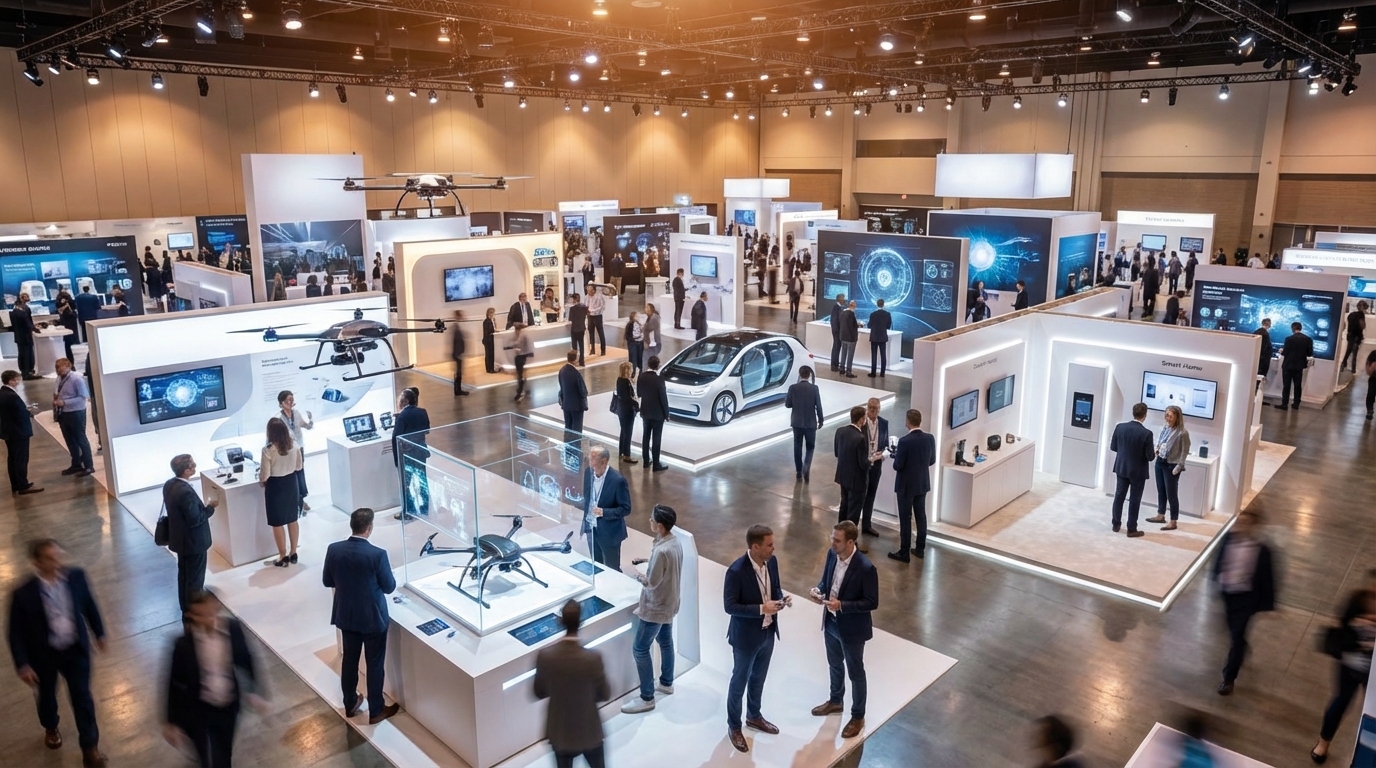

The landscape of consumer electronics has undergone a fundamental shift at CES 2026, moving beyond the novelty of generative AI into a new era of functional, autonomous integration. This year’s exhibition highlights a transition from devices that merely suggest content to “Agentic AI” systems capable of independent task execution [4]. From ultra-thin wireless displays and high-performance Arm-based computing to medical-grade wearables for the general public, the innovations showcased this year signal a future where technology is more invisible, more capable, and more sustainable than ever before.
The Rise of Agentic AI and Autonomous Systems
One of the most significant overarching trends defined at this year’s event is the emergence of Agentic AI. While previous years focused on generative models that could produce text or images, the industry has now pivoted toward action-oriented hardware. These new systems are designed to function as autonomous assistants, moving beyond simple chatbot interfaces to manage complex real-world tasks such as booking travel arrangements and independently controlling smart home ecosystems [4]. This represents a critical evolution from “content creation” to “task execution,” where AI is no longer a tool used by the consumer, but an agent acting on their behalf [4].
Samsung’s Ballie: From Concept to Home Hub
A prime example of this agentic shift is Samsung’s updated Ballie AI robot. After several years of being presented as a concept, the robot has been fully realized as a functional home hub with a confirmed release window and pricing for 2026 [3]. The latest iteration is powered by a spatial AI engine and features deep integration with Google Gemini, allowing it to navigate homes autonomously [3]. Beyond its role as a patrol bot, Ballie is equipped to project 4K content onto any available surface, effectively turning any room into a media center while serving as a central point for smart home management [3].
Next-Generation Display Technology
The television and display market continues to push the boundaries of aesthetics and performance, with LG leading the charge through significant updates to its OLED lineup. The focus this year is on achieving a “completely cable-free aesthetic” without sacrificing the high refresh rates demanded by modern gamers and enthusiasts [1].
LG OLED evo W6 ‘Wallpaper’ TV
LG has officially brought back the wallpaper form factor with the unveiling of the OLED evo W6. This ultra-thin display measures only 9mm in depth, allowing it to sit nearly flush against a wall [1]. To maintain its slim profile, the W6 utilizes “Zero Connect” technology, which offloads processing and ports to a separate box. This allows the screen to receive true wireless 4K connectivity at a 165Hz refresh rate, eliminating the need for visible cables running to the display [1].
LG OLED evo G6 and Hyper Radiant Color
For those prioritizing raw visual output, the LG OLED evo G6 series introduces “Hyper Radiant Color” technology. This advancement allows the G6 to reach peak brightness levels that are 3.9 times higher than those found in conventional OLED panels [2]. Furthermore, the G6 is designed with the gaming community in mind, becoming the first television to support 120Hz cloud gaming with integrated ultra-low latency for Bluetooth controllers [2].
Computing and Mobile Architecture
The computing sector at CES 2026 is dominated by a move toward power efficiency and the integration of high-end graphics performance into smaller, more versatile form factors. NVIDIA and ASUS, in particular, have introduced hardware that challenges traditional expectations of laptop performance and battery life.
NVIDIA’s Blackwell and the N1x SoC
NVIDIA has introduced its “Blackwell” mobile GPU architecture, bringing its latest high-performance computing standards to the laptop market [2]. Perhaps more disruptive is the teaser for the N1x, an Arm-based AI PC system-on-chip (SoC). The N1x is designed to compete directly with high-end discrete graphics cards by integrating performance levels comparable to an RTX 5070 into a highly power-efficient Arm processor [2]. This move signals a potential shift in the industry toward Arm-based systems that do not compromise on gaming or AI processing power.
ASUS Zenbook Duo: Solving the Dual-Screen Dilemma
ASUS has refined its multi-screen offerings with the 2026 Zenbook Duo. Built on Intel’s “Panther Lake” platform, this device features two 14-inch OLED screens [2]. To address the “battery anxiety” often associated with dual-display setups, ASUS has implemented a unique dual-battery configuration. By dedicating separate power cells to each of the two display panels, the manufacturer aims to provide a more reliable and longer-lasting user experience for multi-taskers [2].
Automotive Innovation and Mobility
The automotive sector continues to merge with the software industry, as seen in the latest offerings from Mercedes-Benz. The 2026 CLA Class is a showcase for the new MB.OS, an operating system that integrates generative AI from both Microsoft and Google to facilitate natural, conversational voice interaction between the driver and the vehicle [4].
On the hardware side, the CLA Class utilizes an 800-volt architecture. This high-voltage system significantly reduces charging times, enabling the vehicle to recover more than 200 miles of driving range in a 10-minute charging session [4]. This combination of advanced software and rapid-charging hardware positions the vehicle at the forefront of the luxury electric market.
Biowearables and Medical-Grade Health Tracking
Health technology is shifting from general fitness tracking toward “medical-grade preventive diagnostics” for the average consumer [5]. Abbott has expanded its “Lingo” line of biowearables to cater to non-diabetic users who are interested in monitoring their metabolic health with high precision. The new sensors are capable of tracking glucose, ketones, and lactate simultaneously [5]. By providing real-time data on these three markers, the device moves beyond basic step-counting to offer a comprehensive look at how the body responds to diet and exercise in real-time.
Gaming and Augmented Reality
In the realm of portable entertainment, Xreal has introduced the Neo hub, an accessory designed to bridge the gap between traditional consoles and augmented reality. The Neo hub serves as a 10,000 mAh power bank and a specialized video adapter [1]. Its primary function is to “crack the code” of Nintendo’s proprietary docking system, allowing users to stream games from the Nintendo Switch 2 directly to AR glasses at 1080p resolution with a 120Hz refresh rate [1]. This provides a high-refresh-rate portable gaming experience that was previously restricted to stationary setups.
Sustainability: The ‘Green by Design’ Movement
Finally, sustainability has evolved from a secondary marketing point to a “core engineering requirement” at CES 2026, largely driven by new reporting directives in the European Union [5]. The “Green by Design” movement has seen major industry players like Siemens and Panasonic commit to circular technology principles. These companies have pledged to use 40% recycled ocean plastics in the construction of their product chassis, signaling a broader industry commitment to reducing the environmental impact of consumer electronics through the use of recycled materials [5].
Conclusion
CES 2026 has demonstrated that the future of technology lies in seamless, autonomous, and sustainable integration. Whether through the task-oriented capabilities of Agentic AI, the visual brilliance of wireless OLEDs, or the metabolic insights provided by new biowearables, the products announced this year focus on providing tangible utility. As these technologies move from the showroom floor to the consumer market, they promise a more efficient and health-conscious lifestyle powered by sophisticated, yet increasingly invisible, hardware.
Sources
- ZDNet: CES 2026 News: Live Updates on TVs, Smart Glasses, Robots, and More
- Tom’s Guide: CES 2026 Live Blog
- Mashable: CES 2026 Live Updates: News and Announcements
- Times of India: Ten Technology Trends to Watch in 2026
- 21k.tools: This Week’s Top Tech Stories: January 2026 Edition