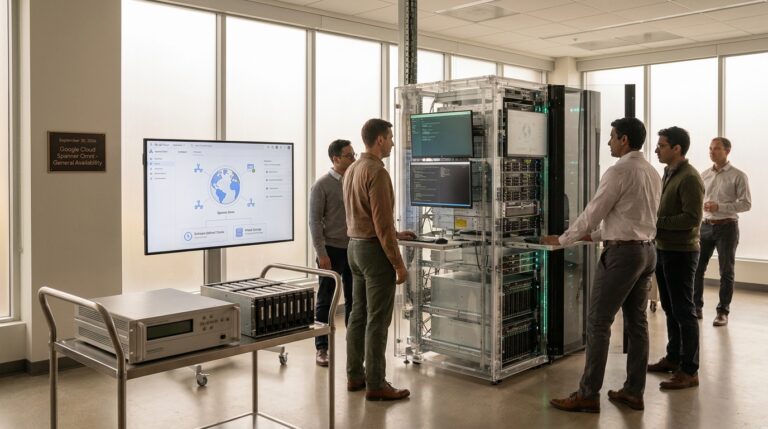

The landscape of enterprise data management is undergoing a fundamental transformation as we move through 2026. At the forefront of this evolution is Snowflake’s strategic acquisition of Observe, a move that signals a definitive shift in how organizations handle telemetry, infrastructure, and business intelligence. By integrating observability directly into the AI Data Cloud, Snowflake is not merely adding a new feature set; it is redefining the architecture of modern enterprise ecosystems. This acquisition highlights a transition toward “Data-Centric Observability,” where the distinction between operational telemetry and core business data begins to disappear [1].
As organizations grapple with increasing complexity, the Snowflake-Observe deal serves as a blueprint for the industry’s direction. It addresses long-standing challenges such as fragmented data silos, the rising costs of legacy monitoring tools, and the need for faster, AI-driven incident resolution. The following five reasons illustrate why this acquisition is setting the tone for the technological and economic standards of 2026.
1. The Rise of Data-Centric Observability and the End of Silos
For years, enterprises have struggled with the separation of operational telemetry—logs, metrics, and traces—from their primary business data. Snowflake’s acquisition of Observe marks a strategic pivot toward “Data-Centric Observability,” a model that integrates these disparate streams directly into the AI Data Cloud [1]. This integration is designed to eliminate the need for separate data silos, which have historically hindered comprehensive analysis.
Integrating Telemetry with Business Context
By bringing telemetry data into the same environment as business data, enterprises can now perform cross-functional analysis that was previously impossible or prohibitively complex. Organizations are no longer limited to looking at infrastructure health in isolation. Instead, they can analyze logs and metrics alongside actual business performance data to gain deeper, more actionable insights [1]. This holistic view allows decision-makers to see exactly how a technical glitch or a latency spike in the infrastructure directly impacts customer behavior or revenue streams.
Leveraging Data Gravity
The move reinforces the industry principle of “Data Gravity,” which suggests that as data sets grow, applications and analytical tools should be moved closer to the data rather than moving the data to the tools [1]. By keeping telemetry within the Snowflake environment, enterprises can significantly reduce the latency and security risks that are typically associated with data egress. In the 2026 landscape, the ability to process and analyze data where it resides is becoming a critical requirement for both performance and data integrity [1].
2. Solving the “Observability Tax” Through Economic Scaling
One of the most significant hurdles for growing enterprises has been the “observability tax”—the rapidly escalating cost of monitoring systems as data volumes increase. Legacy observability tools often utilize pricing models that become prohibitively expensive when dealing with the massive amounts of machine data generated by modern cloud-native applications [1].
Low-Cost Storage Architecture
Snowflake is positioning its low-cost storage architecture as the solution to this economic challenge. By leveraging this architecture for high-volume machine data, the acquisition allows companies to store and query massive datasets more economically than traditional specialized tools [1]. This shift in economics enables businesses to retain more data for longer periods, providing a richer historical context for troubleshooting and long-term trend analysis without the financial burden typically associated with high-volume data ingestion.
Querying at Scale
The deal allows for the processing of complex queries during critical system outages or performance degradations. Because the data is stored in a highly scalable cloud environment, IT teams can execute deep-dive investigations into massive datasets without the performance bottlenecks often found in legacy monitoring platforms [1]. This economic and technical efficiency is a cornerstone of the 2026 strategy for managing enterprise-scale machine data.
3. Transitioning from Reactive Troubleshooting to Proactive AIOps
In the high-stakes environment of 2026, simply knowing that a system is down is no longer sufficient. The integration of Observe’s “The Hub” technology into Snowflake’s ecosystem enables a shift from reactive troubleshooting to proactive system management. This technology allows Snowflake to natively correlate disparate data types, which is essential for automated incident response [1].
Linking Infrastructure to Outcomes
The ability to link infrastructure performance to business outcomes in real-time is a transformative capability. When an IT team can see how a specific server’s latency is affecting checkout completion rates, they can prioritize fixes based on business impact rather than just technical severity [1]. This correlation is facilitated by the unified data model that Observe brings to the Snowflake platform.
Reducing Mean Time to Resolution (MTTR)
By January 2026, the integration of AIOps into core data platforms has become a primary driver for reducing the Mean Time to Resolution (MTTR) for critical system outages [1]. The combination of Observe’s specialized observability features and Snowflake’s immense compute power allows for the rapid identification of root causes. Automated systems can now filter through the “noise” of massive datasets to find the actionable signals that indicate the true source of a problem [2].
4. Industry Consolidation and the “Best-of-Platform” Trend
The Snowflake-Observe acquisition is a clear indicator of a broader trend in 2026: the move away from “Best-of-Breed” specialized tools toward unified “Best-of-Platform” solutions. Snowflake is now positioning itself to compete directly with long-standing observability incumbents like Splunk and New Relic by offering a single, integrated platform [1].
The Global Move Toward Integration
This drive for integrated, full-stack digital services is not limited to Snowflake; it is a global phenomenon. For instance, Tietoevry’s acquisition of OpenSpring and GrupoOneTec in early 2026 mirrors this industry-wide trend of consolidation [3]. These moves are designed to bolster cloud and AI transformation capabilities, showing that the preference for comprehensive, unified service providers is extending across the entire digital services layer [3].
Simplifying the Vendor Landscape
Enterprises in 2026 increasingly prefer managing a single, robust platform over the complexity of maintaining multiple specialized vendors. By providing a unified platform that handles data warehousing, AI, and now observability, Snowflake reduces the operational overhead for IT and procurement departments. This consolidation simplifies the technology stack and ensures that different components of the data ecosystem work together seamlessly [1].
5. Prioritizing Security and AI-Driven Data Integrity
As observability data becomes more integral to business operations, the security and “trustworthiness” of that data have become paramount. By 2026, AI-driven automation is being prioritized across both marketing and data sectors to manage the increasing complexity of enterprise ecosystems [2]. However, this automation relies heavily on the integrity of the underlying data.
Software Supply Chain Security
The 2026 “State of Trusted Open Source” report emphasizes that security within the software supply chain is now a non-negotiable prerequisite for observability data integrity [4]. As Snowflake integrates more external telemetry tools and open-source components, ensuring the “trustworthiness” of these elements is critical for maintaining enterprise compliance and operational security [4].
AI as a Filter for Actionable Signals
The Snowflake-Observe deal aligns with the 2026 trend of using AI to manage the sheer volume of data generated by modern systems. AI is being utilized to filter out the irrelevant “noise” from massive datasets, allowing IT teams to focus exclusively on actionable signals [2]. This ensures that the insights derived from the observability platform are both accurate and relevant to the business’s immediate needs, further cementing the role of AI-driven automation in the modern data stack.
Conclusion
Snowflake’s acquisition of Observe is a landmark event that defines the trajectory of the data industry in 2026. By championing Data-Centric Observability, Snowflake is addressing the critical needs of the modern enterprise: lower costs, reduced complexity, and faster resolution times. This move signals the end of the era of siloed monitoring and the beginning of a period where infrastructure health and business success are analyzed as a single, unified narrative. As the industry continues to consolidate around powerful, integrated platforms, the focus remains on leveraging AI and secure, scalable architectures to turn massive amounts of machine data into a strategic asset [1], [2], [4].